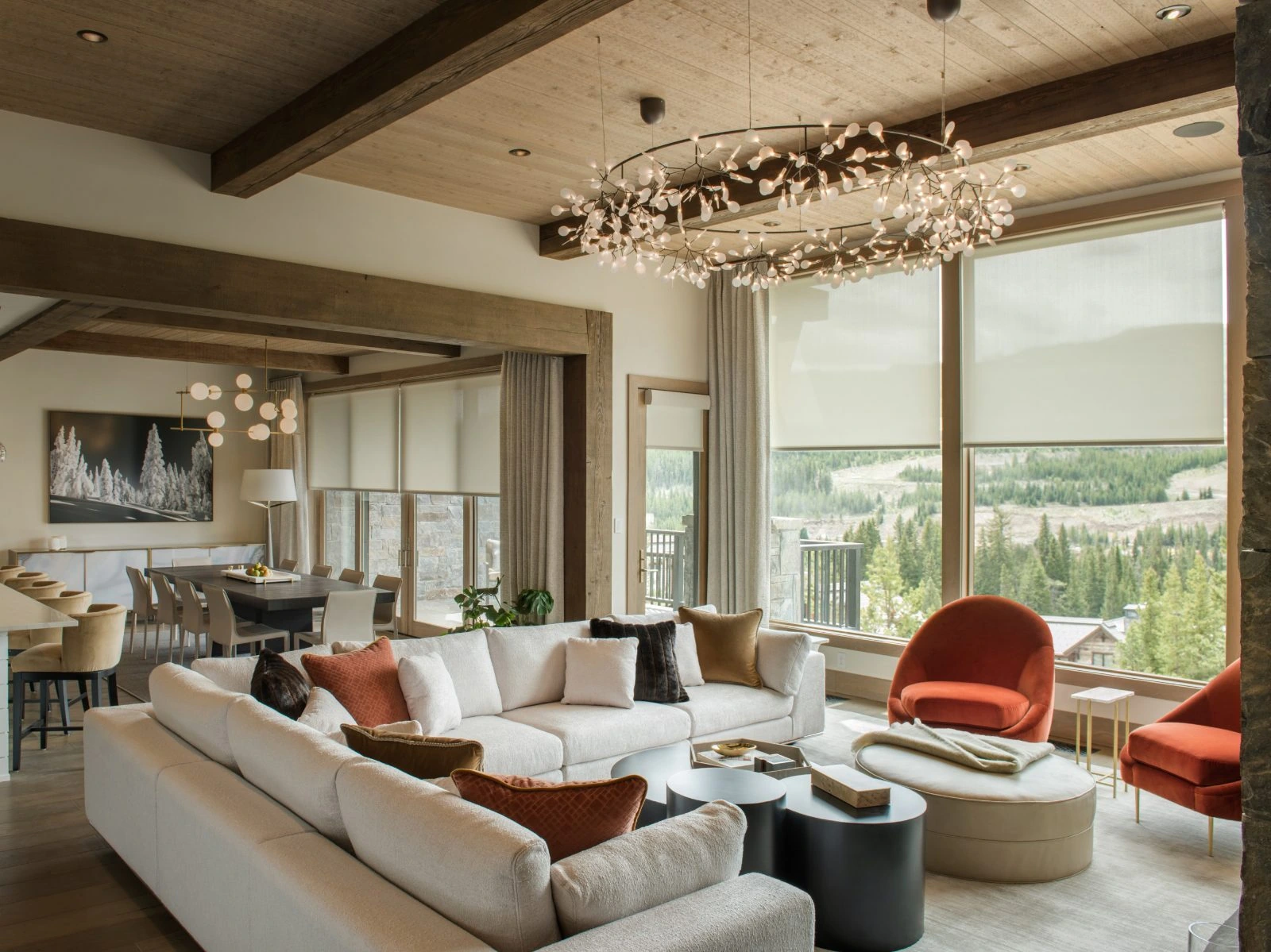
For Architects & Designers
We protect the design long before the drywall remembers it.
Bring technology into the conversation early, and it never has to compromise the design later.
Where architecture holds
The closer coordination happens to concept, the cleaner the result stays in reality.
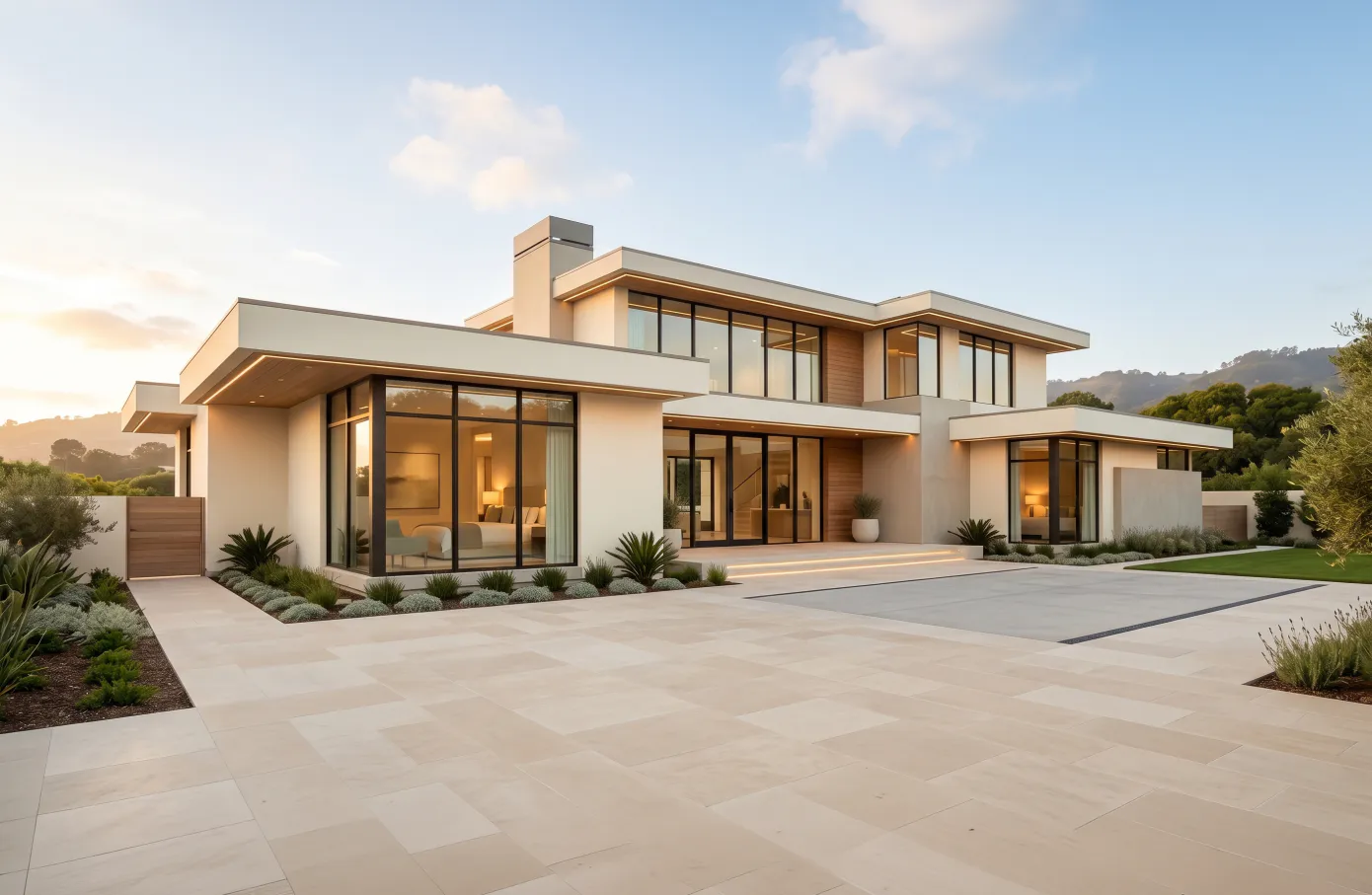
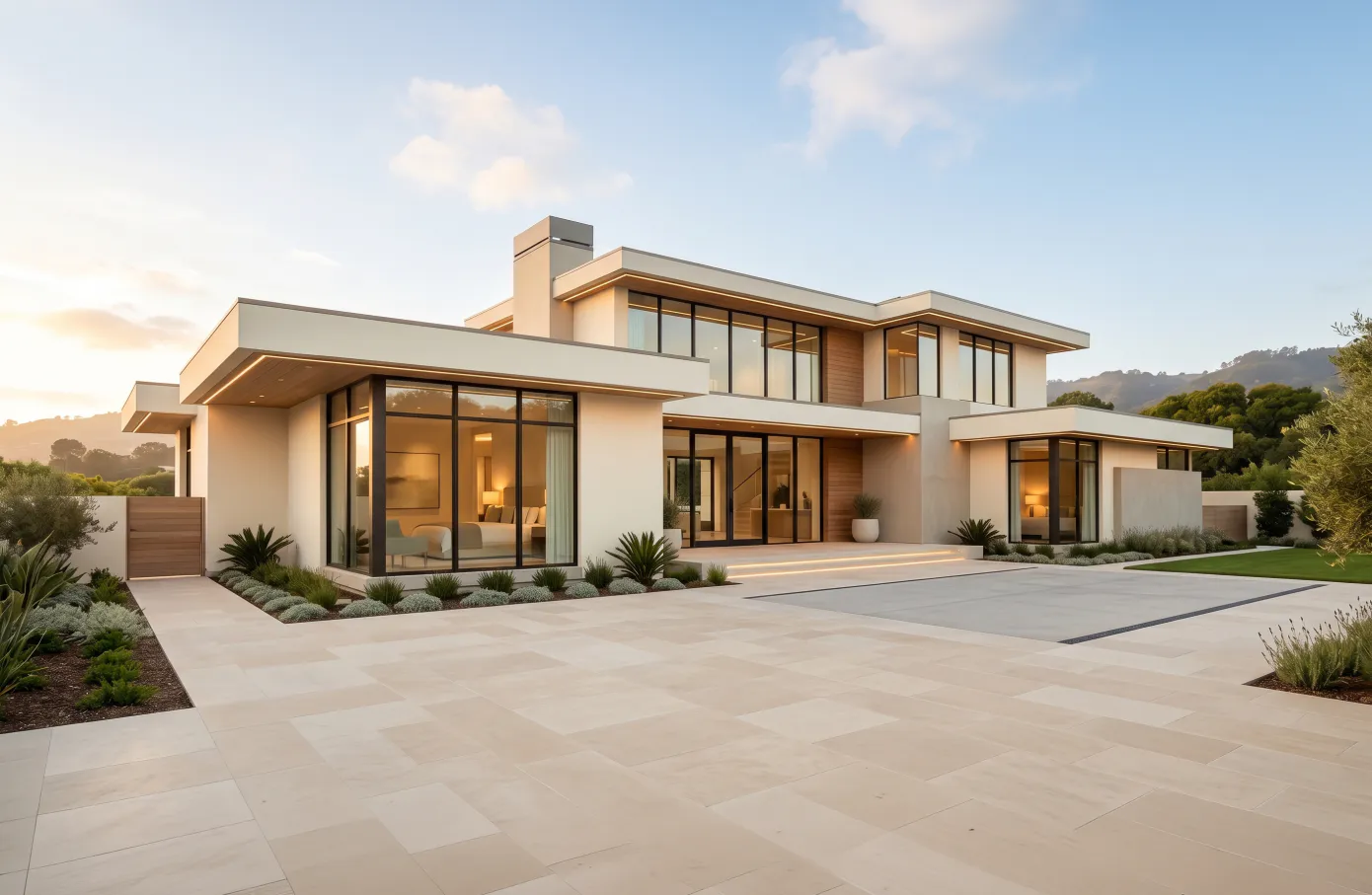
The earlier we enter, the less technology costs the design. We resolve the hard things on paper ceilings, millwork, glazing, keypad locations so the built space stays as clean as the rendering.
Why architects work with us
Less reinterpretation between design intent and built result.
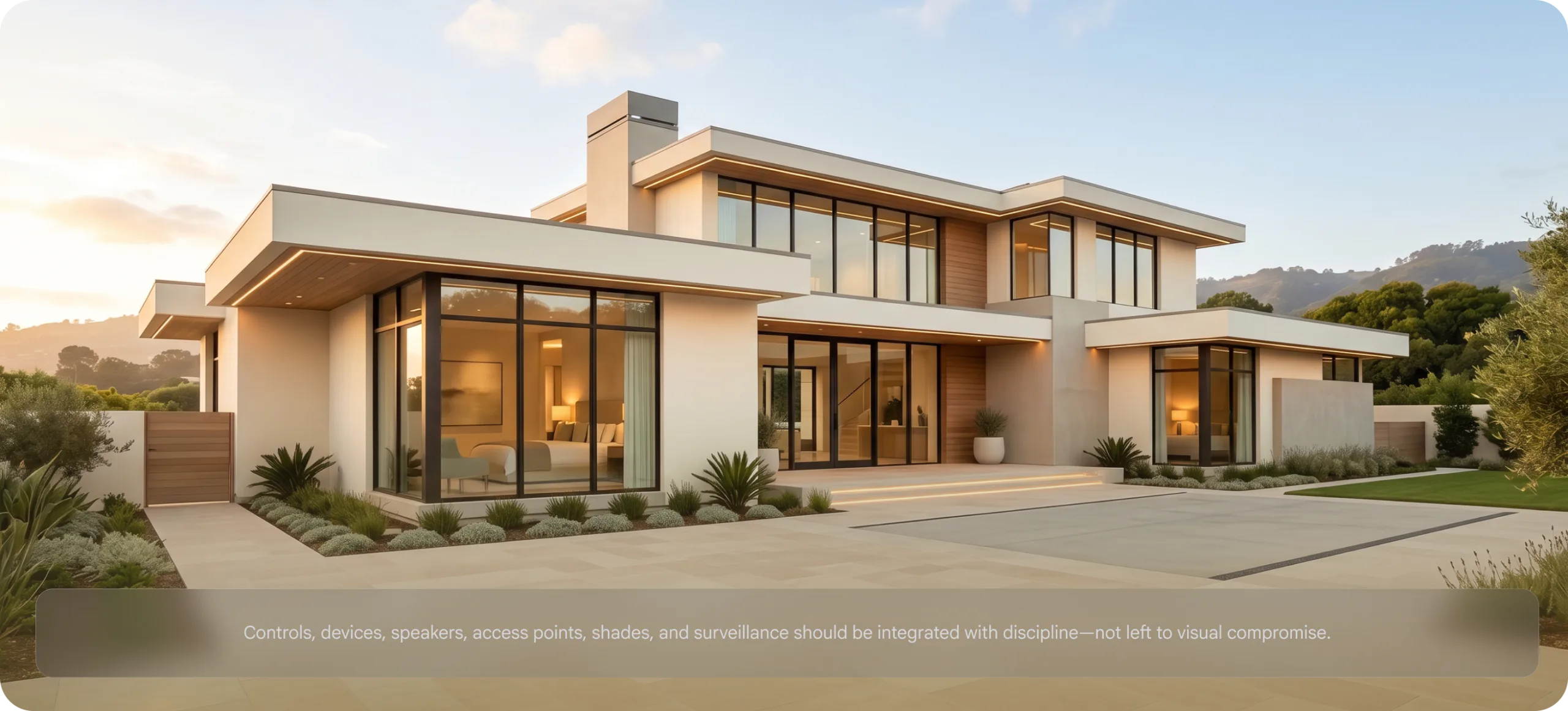
Controls, devices, speakers, access points, shades, and surveillance should be integrated with discipline, not left to visual compromise.
-
Motorized window treatments Strategy
-
Entertaining-Focused Property
-
Seasonal home
Design risk points
Where technology damages a design (and how we prevent it)
-
Ceiling congestion
We coordinate every speaker, vent, and fixture before the ceiling is set.
-
Millwork conflicts
Equipment is planned into cabinetry, not crammed in after.
-
Glazing & shading
Shade pockets and glare strategy are designed with the glass, not bolted on.
-
Visual hardware noise
Fewer, more elegant controls placed where they belong.
-
Late-stage corrections
The expensive surprises happen when no one protects the design early. We do.
-
Coordination drift across disciplines
We keep lighting, AV, electrical, millwork, and HVAC aligned to one shared design intent so details don't diverge as the project develops.
Where Projects Usually Start to Drift
Most technology damage happens when no one protects the design early enough
-
Ceiling Congestion
Lighting layers, speakers, sensors, access points, diffusers, and shading requirements quickly compete for the same visual territory.
-
Millwork Conflicts
Displays, control interfaces, hidden equipment, and speaker strategies become harder to resolve after detailed joinery is underway.
-
Glazing & Shading Problems
Privacy, daylight, pocketing, and control logic often arrive too late to be handled elegantly.
-
Visual Hardware Noise
Without discipline, the project accumulates devices that weaken the architectural language of the space.
-
Control Confusion
Clients may end up with a technically capable home that feels frustrating or visually overburdened in everyday use.
-
Late-Stage Corrections
The later the intervention, the more expensive, visible, and structurally awkward the solution usually becomes.
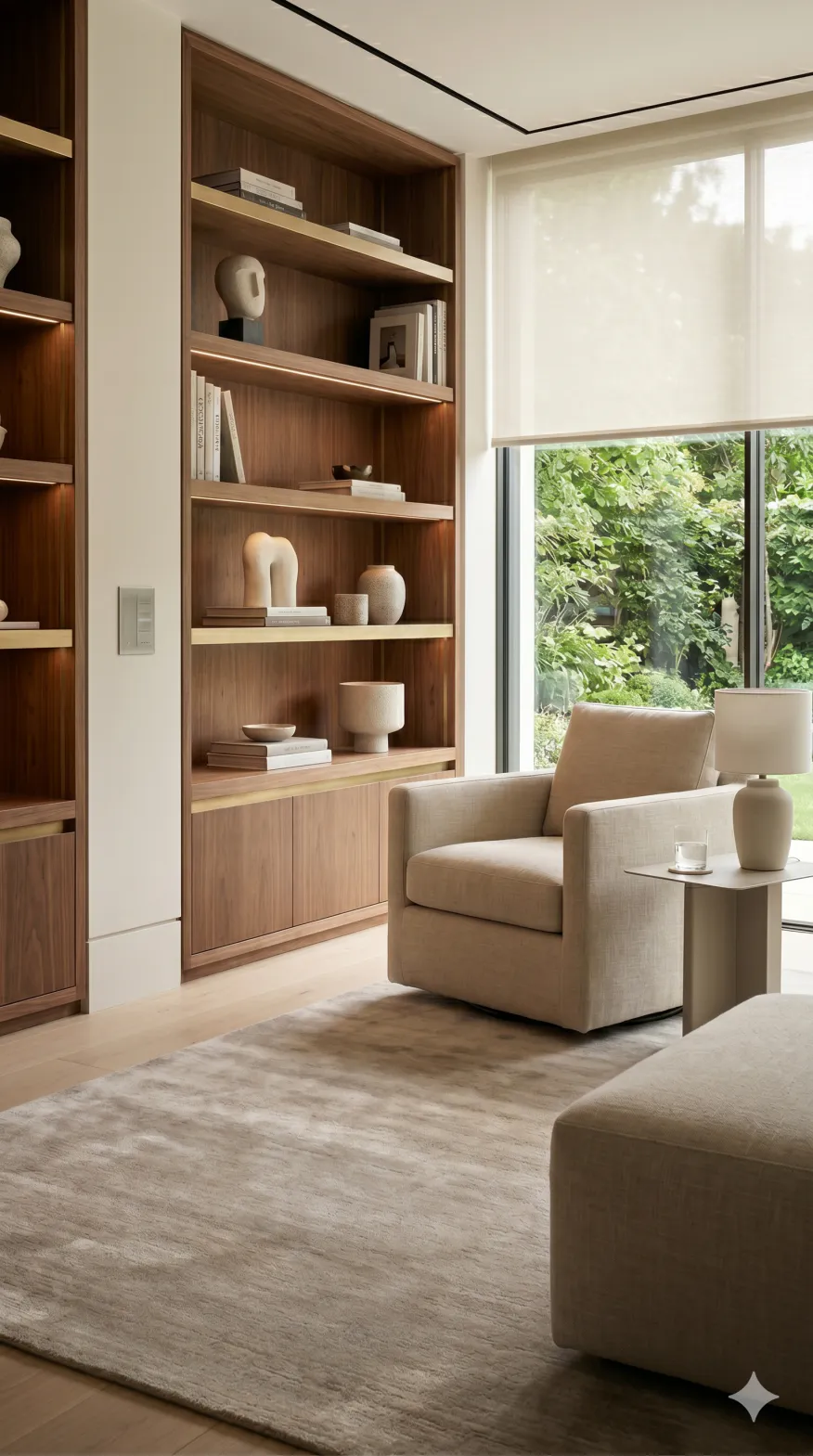
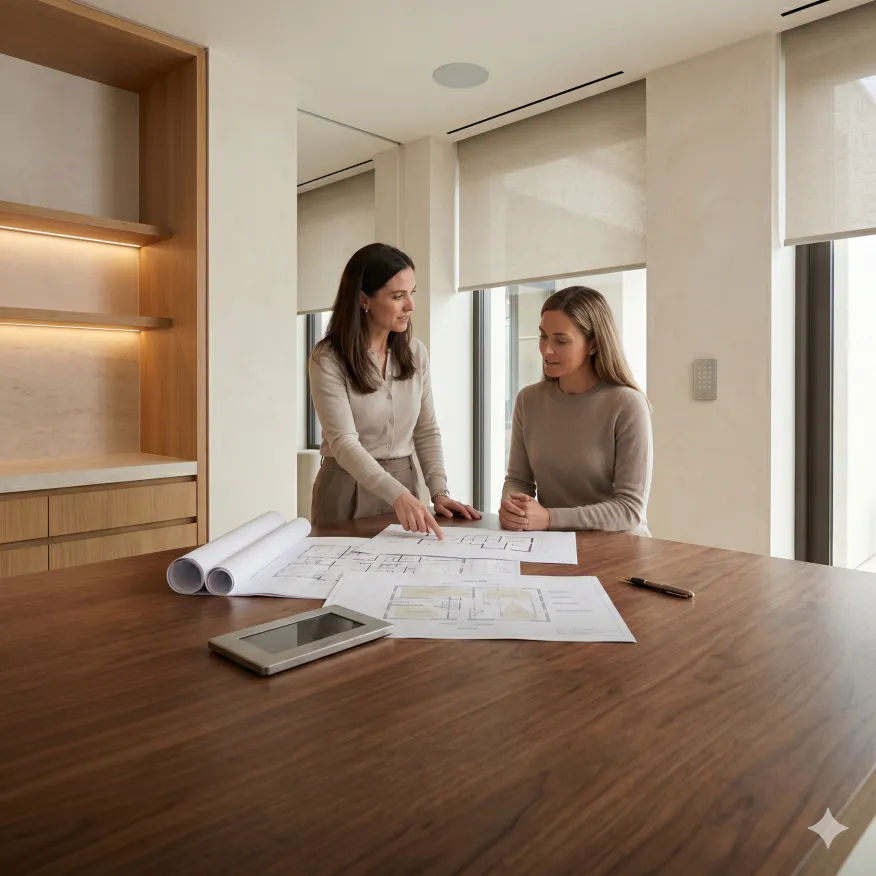
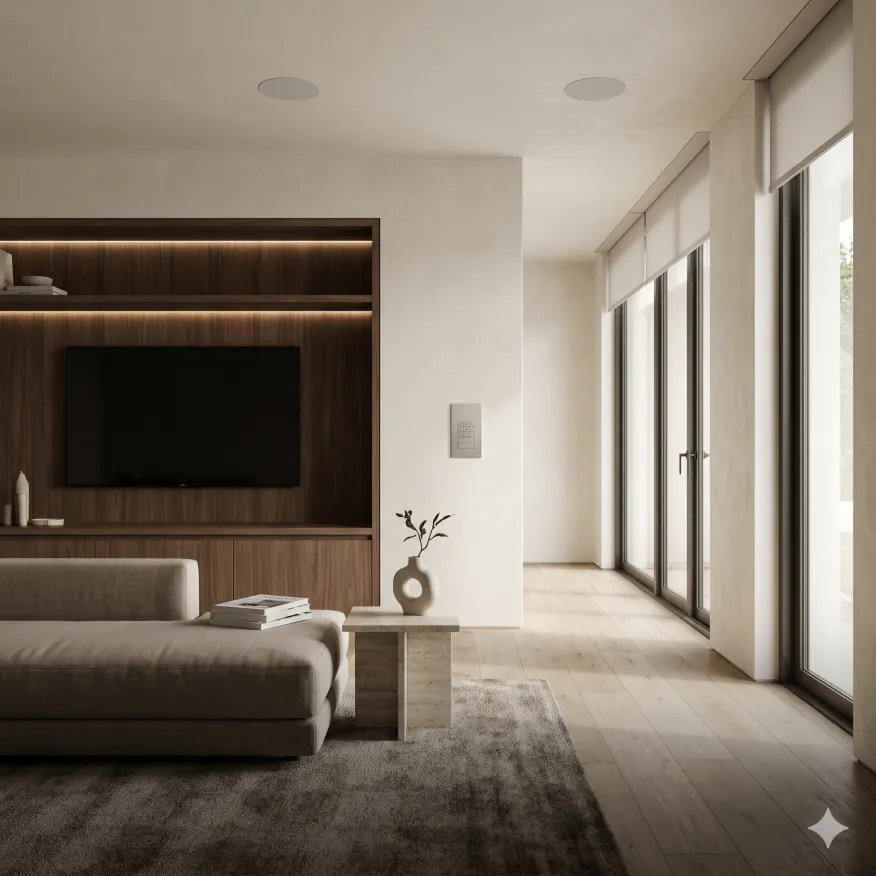
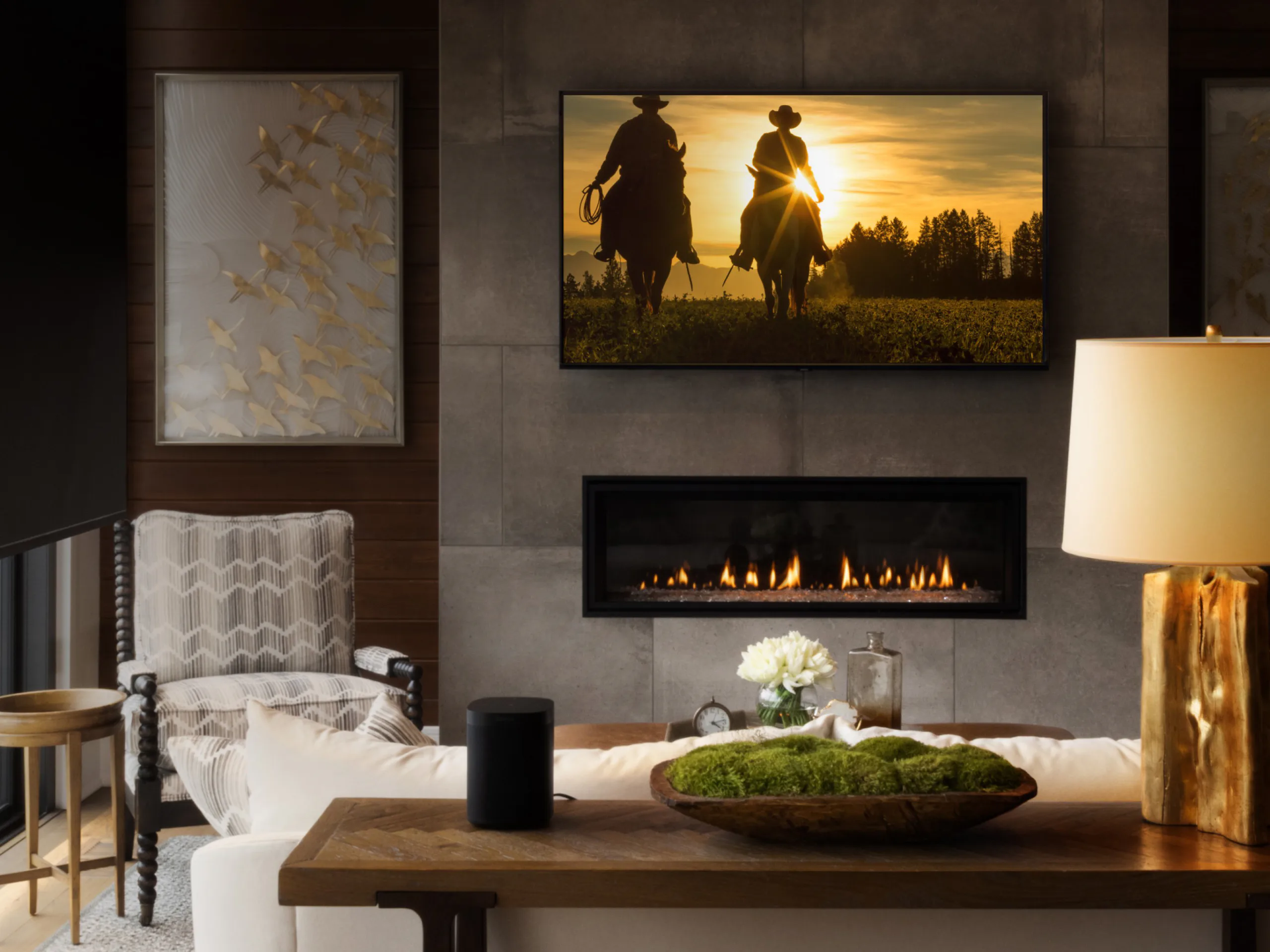
A Better Trade Relationship Is Built on Better Tools
Design professionals need more than generic marketing language
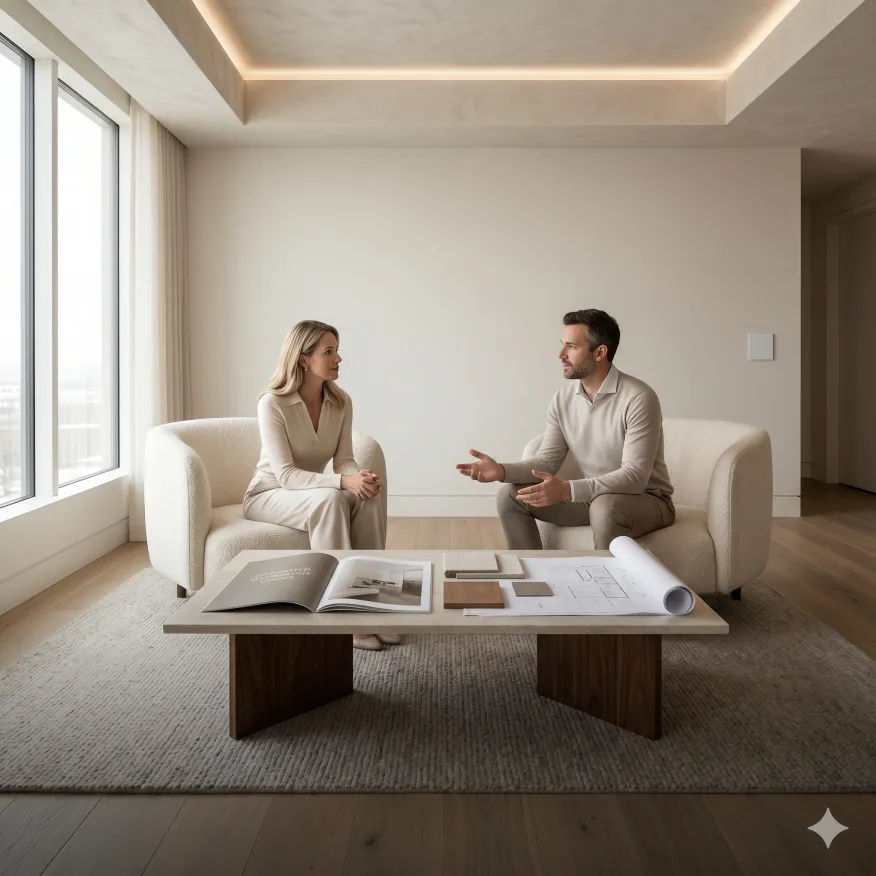
A serious collaboration with architects and interior designers should include practical support: technical guidance, early coordination input, clearer integration standards, and design-aware documentation that helps the team move faster with fewer surprises.
-
Early coordination
Integration input during design, so technology decisions never derail the architecture later.
-
Integration standards
Clear conventions for power, network, and device placement the whole team can build to.
-
Design-aware documentation
Drawings and specs written to respect sightlines, materials, and the design intent.
-
Specification support
Guideline thinking and product guidance that helps you specify with confidence.
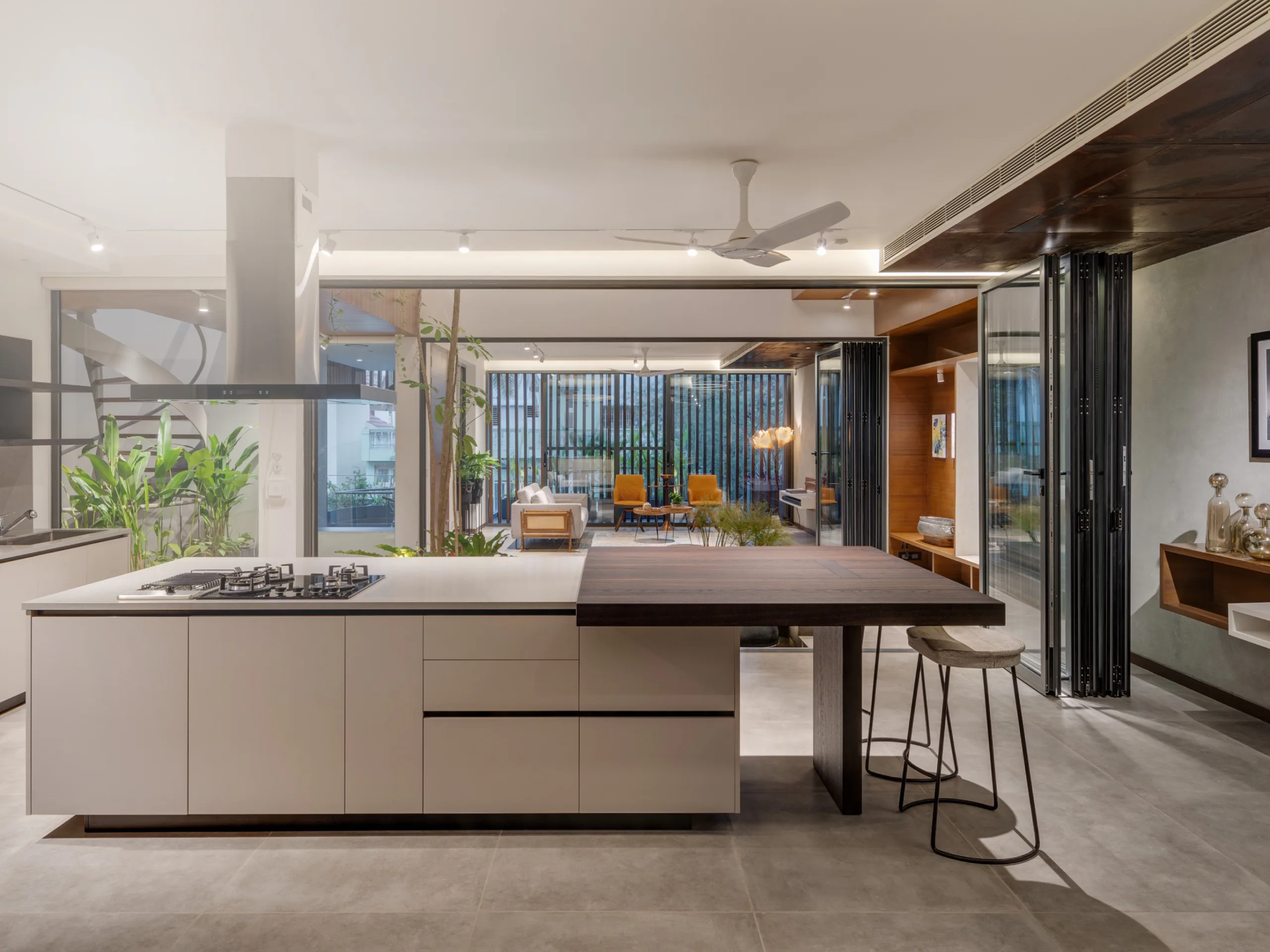
Built for the Realities of South Florida Design
Where climate, light, and lifestyle shape every decision
South Florida projects demand precision across glazing, daylight control, material transitions, and indoor-outdoor flow. High exposure, strong client expectations, and design-driven development make coordination between architecture and systems critical from the outset. When those layers are aligned early, the result is a space that stays coherent in both detail and experience.
-
Salt, Sun & Humidity
Florida conditions shape every system decision. Exposure, moisture, and heat require early coordination so performance and longevity align with the architecture.
-
Light, Shade & Heat
Large glazing and strong daylight redefine interior balance. Lighting and shading work together to manage glare, protect privacy, and preserve spatial clarity.
-
Power & Connectivity
System performance depends on what happens behind the walls. Network, control, and infrastructure planning are resolved before construction closes the space.
-
Access & Long-Term Service
Design doesn't end at completion. Clear pathways, documentation, and service access ensure the building can be supported without disrupting its fabric.
Why Innovative
Because design professionals need a collaborator, not a late-stage complication
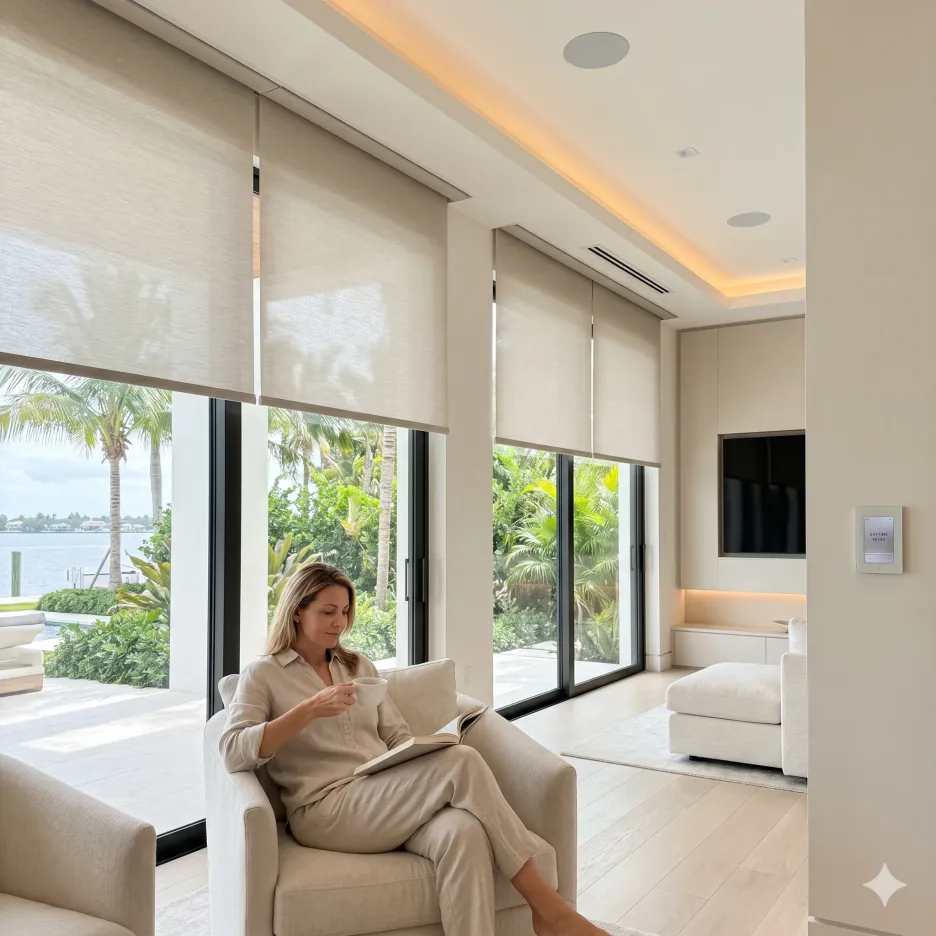
Design-Led Thinking
We begin with the visual and experiential goals of the project, not a list of products to push into it.
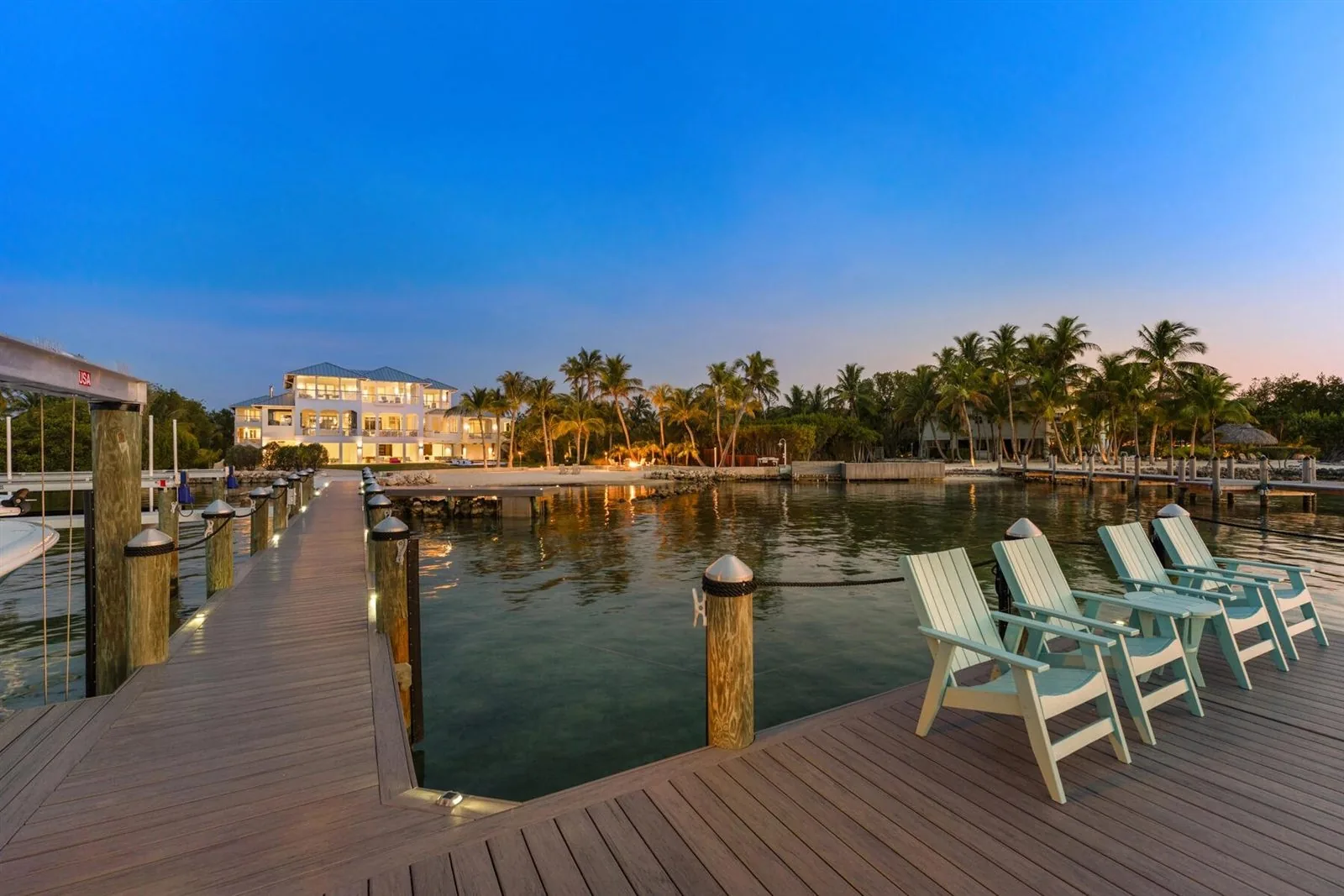
For Design Teams Who Want Fewer Compromises
Bring the technology conversation in early, and the design stays stronger later
Architects and interior designers benefit most when technology is considered before ceilings harden, millwork is finalized, control locations become permanent, and glazing or shading opportunities are lost. Early coordination protects the visual clarity of the project and reduces downstream disruption. Innovative collaborates closely with architects, interior designers, builders, developers, and site teams to ensure the technology layer is aligned with the design concept, the material language, and the lived experience the project is meant to deliver.
An Operating System for Better Living
We define how your space feels and functions.
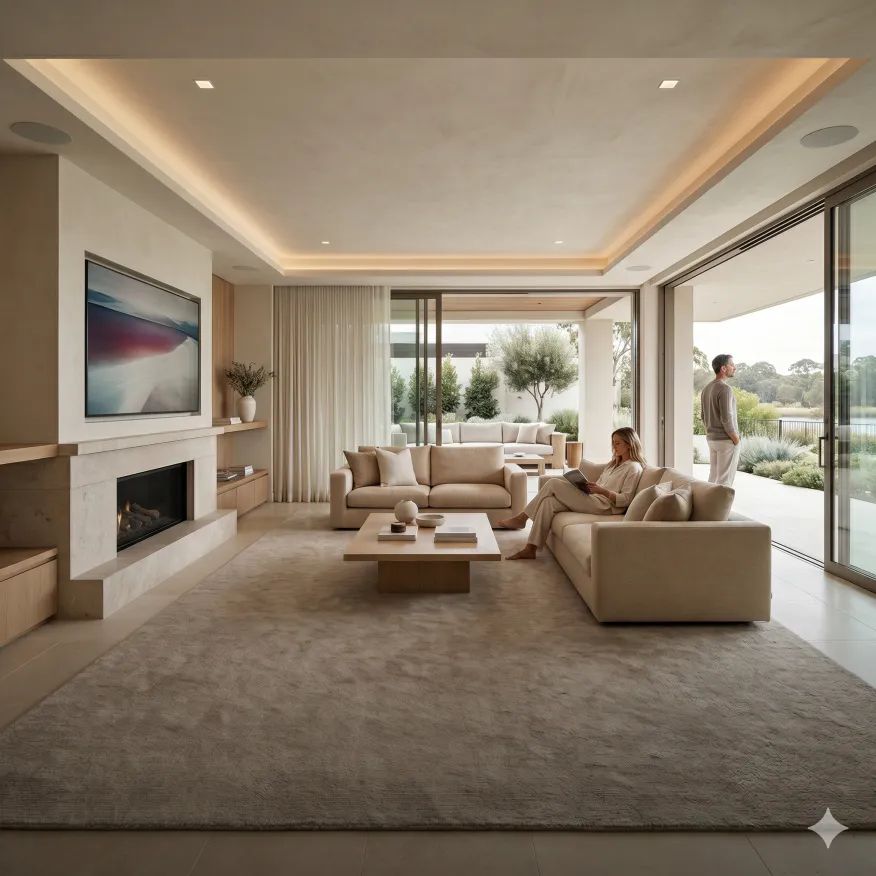
The best technology does not demand attention. It works quietly in the background, supporting the architecture, protecting privacy, elevating comfort, and simplifying everyday life. That is the standard Innovative brings to every project. We approach each environment as a complete ecosystem. Lighting, shading, audio, cinema,
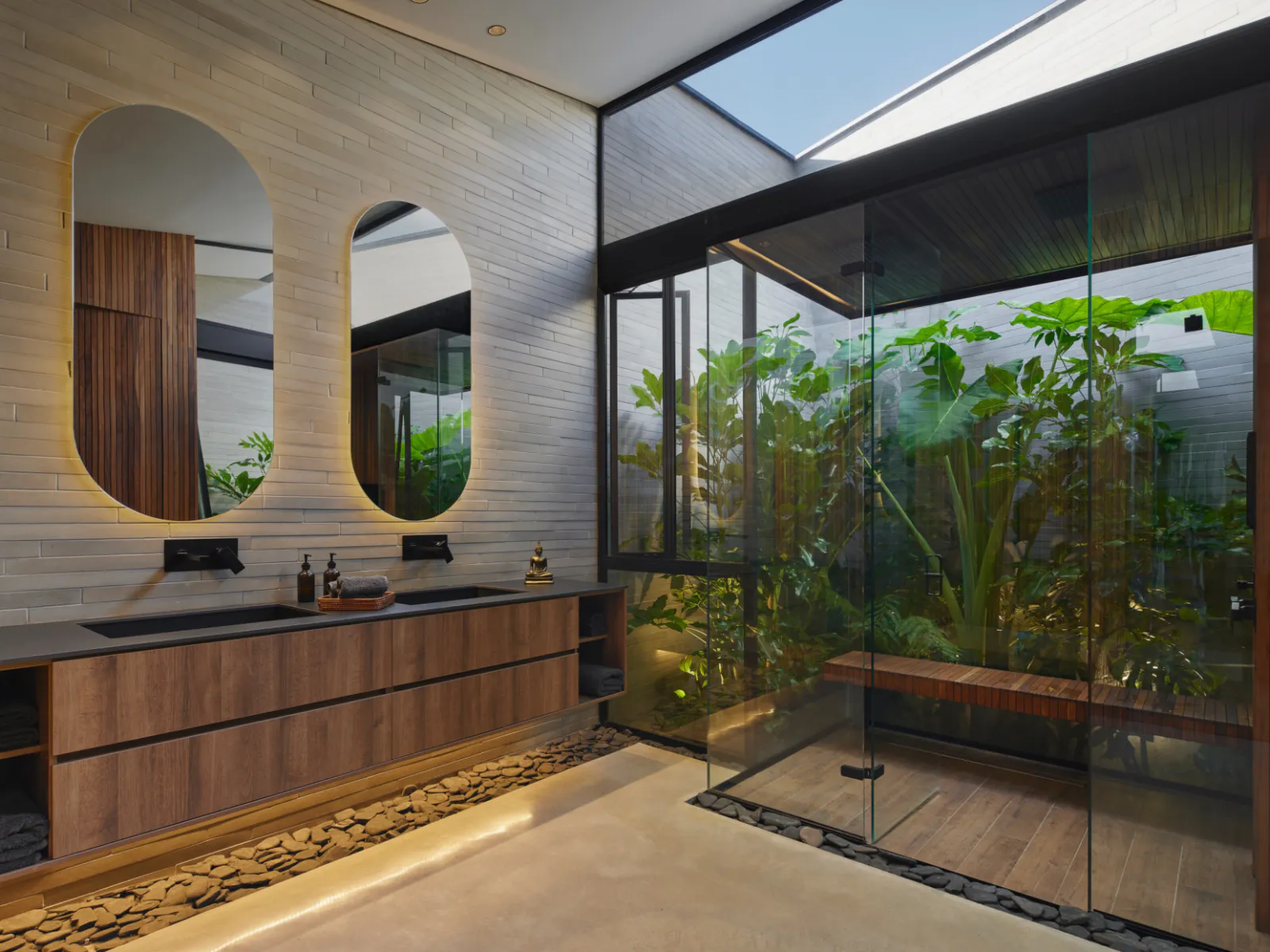
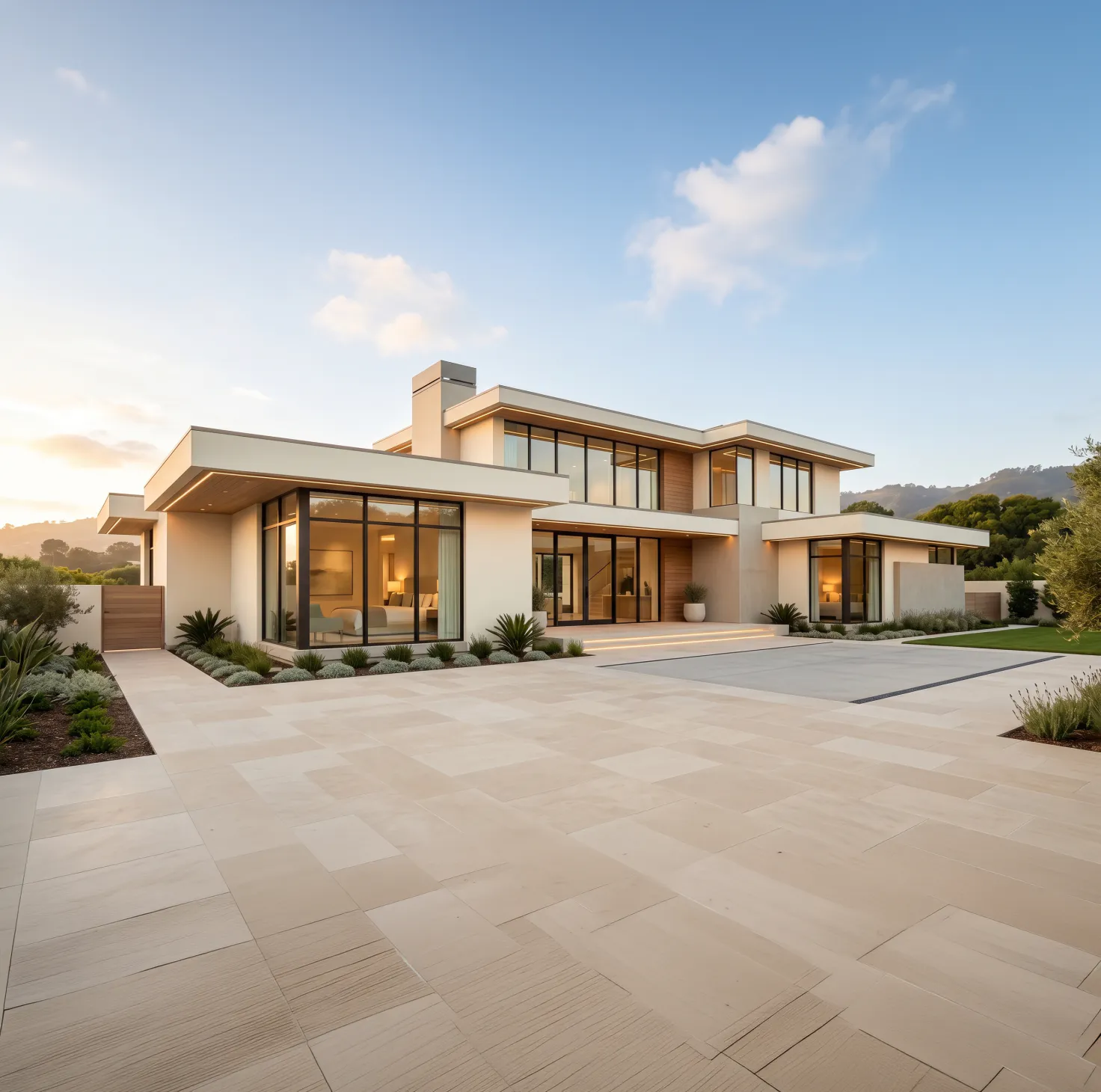
What Better Design-Technology Alignment Changes
The finished project looks cleaner, feels calmer, and functions more beautifully
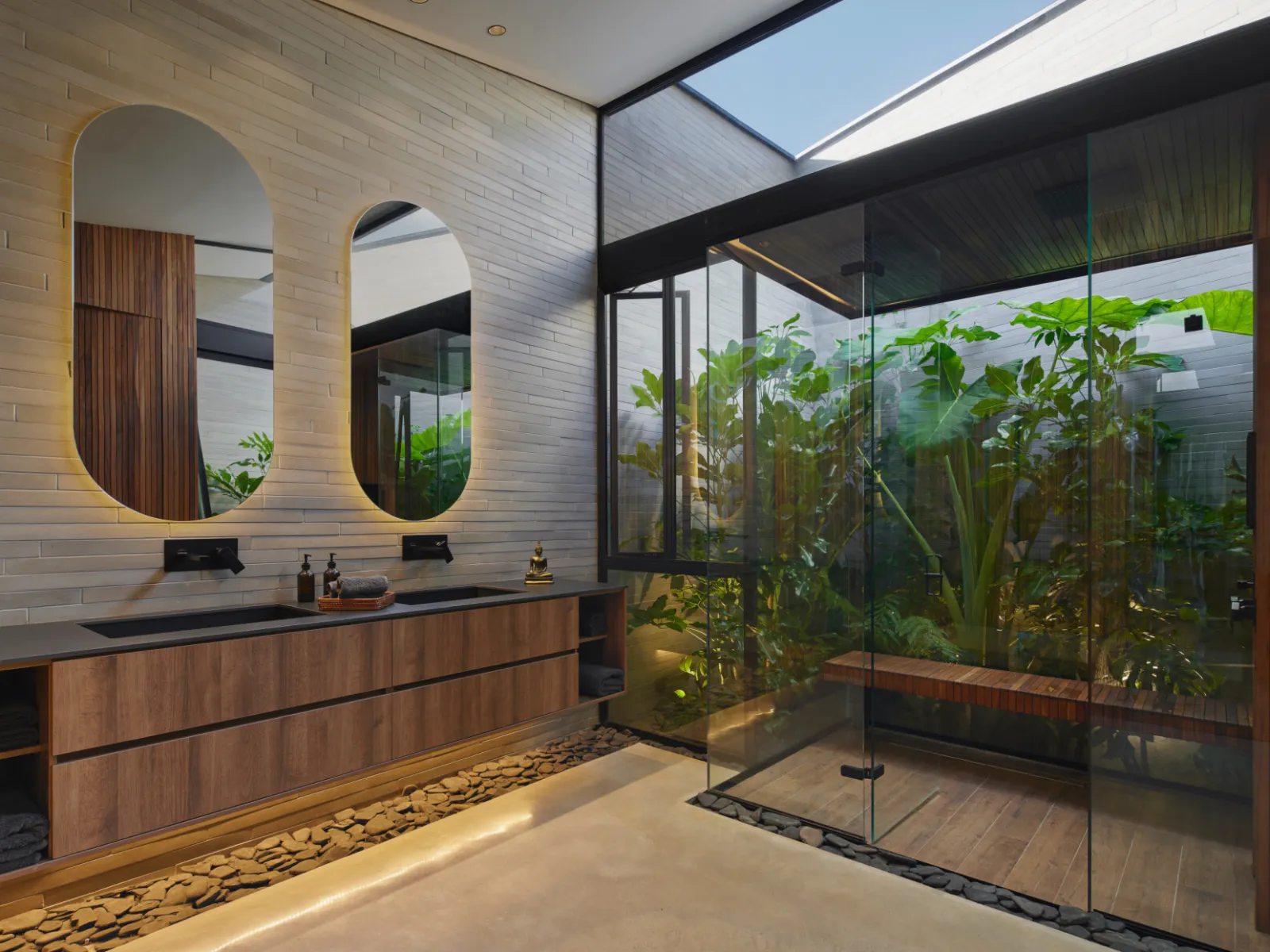
Start Before the Visual Compromises Start
How we collaborate
We work in your drawings, speak your language, and stay invisible to your client until you want us seen. Your design stays the hero.